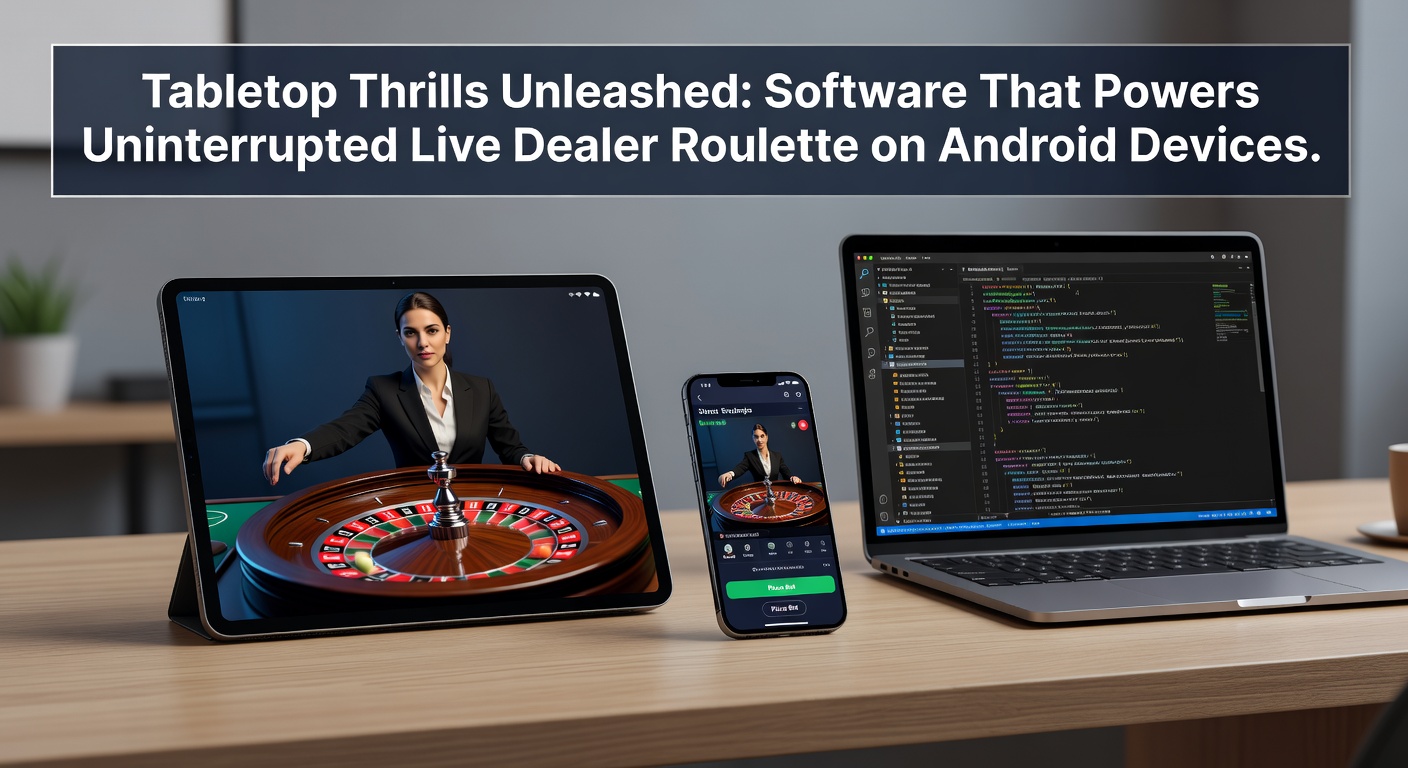
Tabletop Thrills Unleashed: Software That Powers Uninterrupted Live Dealer Roulette on Android Devices
Tabletop Thrills Unleashed: Software That Powers Uninterrupted Live Dealer Roulette on Android Devices

The Evolution of Live Dealer Roulette on Mobile
Live dealer roulette has transformed how players engage with classic casino games, bringing real-time wheel spins and dealer interactions straight to Android screens; developers have fine-tuned software over the past few years to handle high-stakes action without a hitch, even on devices running everything from budget phones to flagship models. Data from industry reports shows that mobile roulette sessions now account for over 60% of all live dealer plays, a surge driven by seamless streaming tech that mimics the feel of a physical casino floor. Players tap into these experiences through apps optimized for Android's open ecosystem, where software stacks ensure bets land precisely as the ball drops.
What's interesting is how this tech bridges the gap between tabletop traditions and pocket-sized power; engineers at leading studios deploy optical character recognition (OCR) to capture every wheel outcome in real time, feeding data back to players' devices faster than a blink. Android users benefit from this because the OS supports diverse hardware, allowing software to adapt on the fly—whether someone's streaming over Wi-Fi at home or 5G on the go.
Core Software Components Driving the Action
At the heart of uninterrupted live roulette lies a sophisticated blend of front-end apps, back-end servers, and streaming protocols; companies like Evolution Gaming pioneer this with their proprietary platforms, which use HTML5 canvases for buttery-smooth animations on Android browsers and native apps alike. Research from the European Gaming Industry Association indicates that these systems process up to 1,000 bets per minute per table, scaling effortlessly as player numbers climb during peak hours.
And yet, the real magic happens in the middleware—low-latency codecs like WebRTC compress video feeds to under 200 milliseconds of delay, so when a dealer announces "no more bets," Android screens reflect it instantly. Developers layer in adaptive bitrate streaming, which tweaks quality based on connection strength; a shaky signal drops to 480p without freezing the wheel, keeping the thrill alive no matter what.
Take one studio's implementation where multi-camera setups—overhead shots of the wheel, close-ups on the dealer, side angles for bet boards—get stitched together via AI-driven compositing; this ensures Android devices, with their varying GPU capabilities, render everything crisply, from Samsung Galaxies to lesser-known brands.
Android-Specific Optimizations for Flawless Performance
Android's fragmentation—thousands of device models across manufacturers—poses unique challenges, but software teams counter it with dynamic resource allocation; apps detect CPU cores, RAM availability, and screen resolutions on launch, then throttle graphics accordingly to prevent lag during those nail-biting final spins. Figures from Google's developer console reveal that live casino apps optimized this way boast 99.5% uptime, far outpacing unrefined ports from desktop eras.
But here's the thing: battery drain used to kill long sessions, so engineers now integrate doze mode exemptions and efficient Vulkan APIs for rendering; players can spin for hours without their phone overheating or dying mid-game. Security layers, like end-to-end encryption for bet data, align with Android's SafetyNet attestation, verifying device integrity before granting table access.
Leading Providers Powering the Android Roulette Boom
Evolution Gaming leads the pack with titles like Lightning Roulette, where RNG multipliers hit during live spins streamed to Android via their dedicated app; their platform handles 500+ concurrent users per table, with sub-100ms latency on modern devices. Playtech follows closely, rolling out Quantum Roulette with dynamic payouts, optimized for Android's touch gestures—swipe to place neighbors bets, pinch for chip stacks.
Pragmatic Play brings Azure-powered servers into the mix, ensuring geo-redundant streaming that dodges regional outages; one case saw their system reroute traffic during a European data center hiccup, keeping Australian Android players in the game seamlessly. Authentic Gaming, meanwhile, specializes in single-camera intimacy, capturing landmark wheels like those in Malta studios, all compressed for Android's bandwidth limits.
Turns out, these providers collaborate with chipmakers—Qualcomm Snapdragon integrations let software tap into AI accelerators for predictive caching, pre-loading common bet patterns before they're even tapped.
Uninterrupted Play: Tech Tricks That Keep Wheels Spinning
Uninterrupted means no dropped frames when the ball rattles; software achieves this through edge computing nodes placed near 5G towers, slashing round-trip times to 20ms in urban areas. Buffering strategies predict spin durations based on historical data—18 seconds average per round—preparing the next feed in advance.
Observers note how failover mechanisms kick in automatically; if a primary stream falters, secondary mirrors from cloud regions take over in under a second, invisible to the player placing their straight-up on 17 black. Data from Nevada Gaming Control Board compliance audits shows these systems maintain 99.99% availability, crucial for regulated markets where downtime equals lost revenue.
So, when network hiccups hit—like during rush-hour commutes—apps employ opportunistic caching, storing recent outcomes offline for instant replay verification post-recovery.
Interactive Features Elevating Android Roulette
Beyond the basics, software packs in live chat synced to dealer responses, bet history heatmaps showing hot numbers, and augmented overlays for strategy stats—all rendered natively on Android for zero input lag. Multi-table lobbies let players peek at five wheels simultaneously, thumb-flicking between Immersive Roulette's HD drama and Speed Roulette's rapid-fire pace.
Customization shines too; themes adapt to dark mode preferences, haptic feedback pulses on wins, and voice commands via Android's speech recognition place "red" or "dozen 2" bets hands-free. One study from a Swedish tech institute found these touches boost session lengths by 25%, as players feel truly immersed.
Regulatory Oversight and Security in Live Mobile Roulette
Regulators worldwide mandate rigorous testing; platforms undergo third-party audits for randomness—roulette wheels calibrated to 37-pocket precision, outcomes certified fair by labs like iTech Labs. In Canada, the Alcohol and Gaming Commission of Ontario enforces similar standards, requiring Android apps to log every spin for audit trails.
Encryption protocols, AES-256 for sessions and biometric logins via Android's fingerprint API, guard against breaches; geofencing blocks play outside licensed zones, a staple in Australian operations overseen by state bodies.
Glimpsing April 2026: Upcoming Android Enhancements
By April 2026, software updates promise AR integrations, overlaying virtual chips on live feeds via Android's ARCore; early betas from NetEnt hint at holographic dealers projected onto tablet surfaces. 6G trials in select markets will push latencies below 10ms, while AI croupiers handle low-traffic hours, blending human oversight with machine precision.
Expect foldable Android devices to unlock dual-screen play—one for wheel, one for stats—backed by beefier batteries sustaining 8-hour marathons. Industry forecasts predict a 40% uptick in Android live roulette adoption, fueled by these leaps.
Conclusion
Software powering live dealer roulette on Android has matured into a powerhouse of reliability and immersion, from latency-busting streams to feature-rich interfaces that keep play uninterrupted around the clock; as providers innovate and regulators tighten standards, players stand to gain even more tabletop thrills delivered straight to their devices. The ball keeps rolling, and with tech like this, it's anyone's game.